
Lately, I’ve had several meaningful conversations with friends who are wrestling with their experience of God. A common thread keeps surfacing: the frustration that God doesn’t seem willing to meet them on their terms.
I’ve been sitting with that.
Because when we look at Scripture—and even the broader story of human history—we see a God who consistently moves toward us. A God who closes the gap we could never bridge on our own. Hebrews reminds us that in Jesus, we have a High Priest who understands us, who sympathizes with our weakness (Hebrews 4:15–16). That is not a distant or indifferent God.
So what do we do when He still feels… unaccommodating?
I wonder if part of the tension lies here: we often want connection with God without surrendering the one thing we’re not willing to let go of.
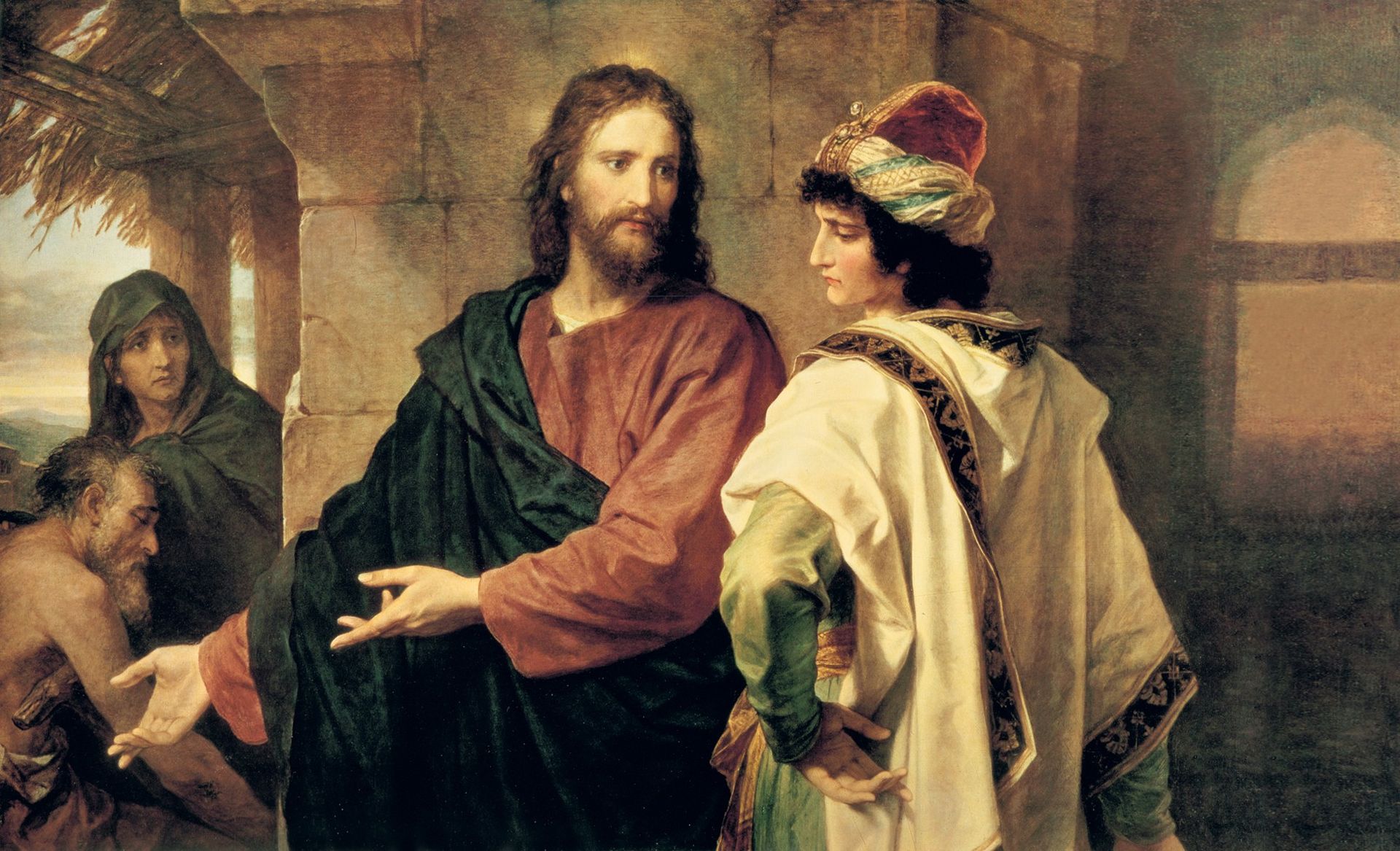
It’s the story of the rich young ruler. Jesus didn’t ask for everything at random—He put His finger on the one thing that mattered more to the man than God Himself. And that’s where the invitation—and the resistance—collided.
At its core, this is about value.
God doesn’t simply want a place in our lives. He asks for the highest place.
And if we’re honest, that can feel unsettling.
But we understand this kind of exclusivity in other areas of life. When I proposed to my wife, I was inviting her into a relationship defined by devotion and exclusivity. When someone becomes a citizen of a nation, they pledge allegiance before receiving its full rights and privileges. In both cases, commitment comes before the fullness of relationship.
Why does it feel so different when God asks for the same?
Maybe it’s because we’ve subtly shifted the center. Scripture tells us that God is for us—but sometimes we interpret that to mean that we are the point of everything.
But the biblical story tells a different, more compelling narrative.
From Genesis to Revelation, we see a God passionate about His glory—His name made known among the nations (Malachi 1:11), His glory filling the earth (Habakkuk 2:14), all peoples drawn to worship Him (Psalm 86:9). Humanity was created as a reflection of Him, a living testimony pointing back to our Creator.
This isn’t divine ego. It’s divine wisdom.
Because the One who made us knows exactly what we were made for.
As C.S. Lewis so powerfully put it in Mere Christianity:
“God made us: invented us as a man invents an engine. A car is made to run on petrol, and it would not run properly on anything else. Now God designed the human machine to run on Himself. He Himself is the fuel our spirits were designed to burn, or the food our spirits were designed to feed on. There is no other.”
So when God calls us to lay something down, it’s not cruelty—it’s kindness.
When He sets terms for relationship, it’s not restriction—it’s invitation.
An invitation to step into the very relationship we were created for.
And maybe the question isn’t, “Why won’t God meet me on my terms?”
Maybe it’s, “What am I holding onto that’s keeping me from meeting Him on His?”
—
There’s something deeply freeing on the other side of that question.