
It’s fascinating to consider how easily the faith we now know as Christianity could have failed to take root in its earliest days.
In the book of Acts, we witness the birth of The Way — a movement within Judaism centered on Jesus as the long-awaited Messiah foretold throughout the Tanakh.
Acts 2 records a catalytic moment: at least 3,000 Jewish pilgrims from across the known world hear the Gospel in their own languages, are deeply moved, and become followers of Jesus. Momentum builds in Jerusalem until institutional resistance rises from Jewish authorities. Persecution scatters the followers of The Way into neighboring cities and regions.
But something unexpected happens.
As they scatter, they keep preaching. And people keep following Jesus.
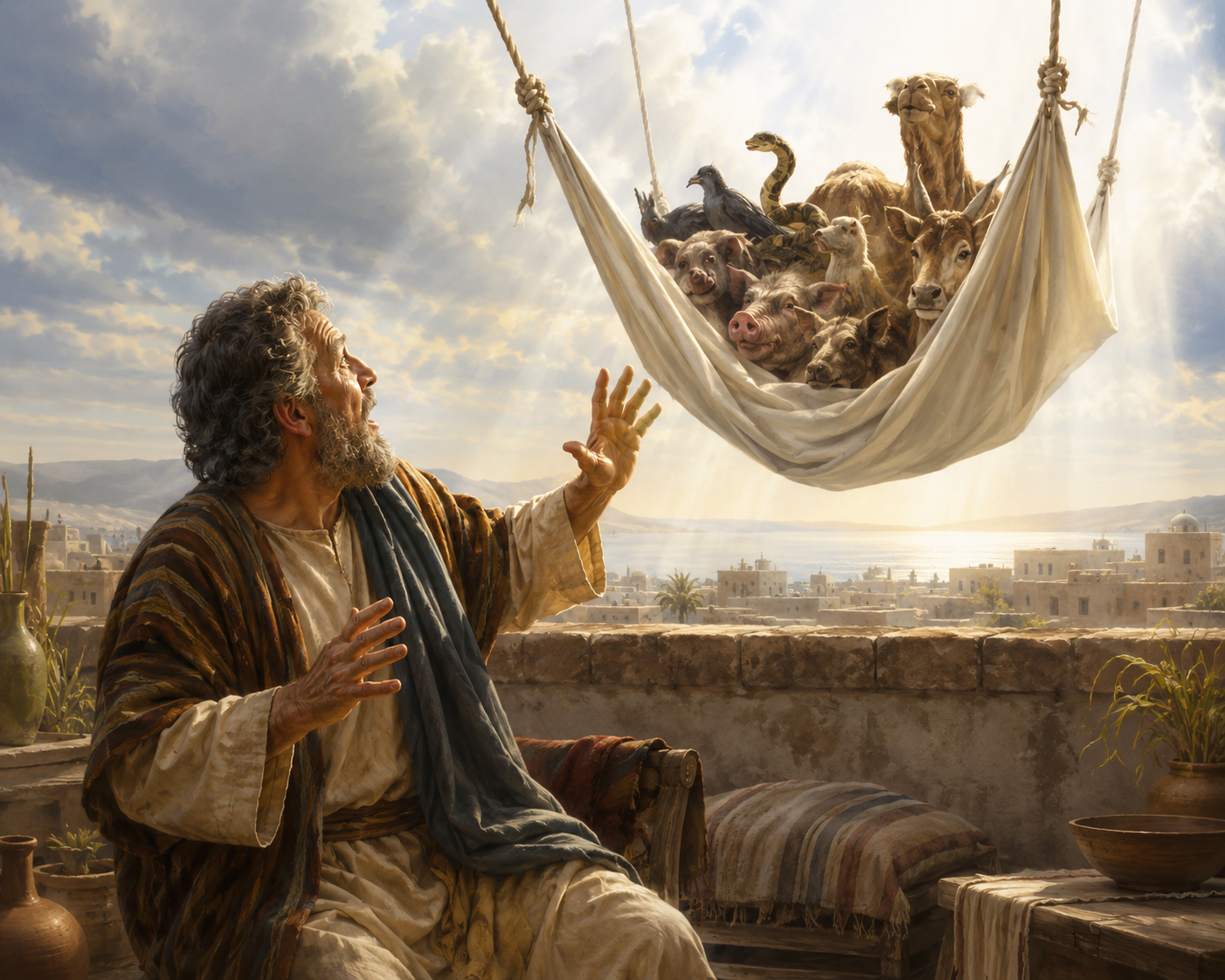
Then Acts 10 introduces another remarkable turning point. God reveals to Peter that Gentiles — non-Jews — are also welcomed into this new movement. Cornelius and his household receive the Spirit in a way that leaves Peter with only one conclusion:
“Who can deny these people baptism?”
Even then, however, The Way largely remained a Jewish movement, complete with expectations around Jewish customs and practices.
Paul and Barnabas continued their pattern of beginning in Jewish communities and only turning elsewhere after rejection.
The next major pivot comes in Acts 15.
Paul meets with church leaders in Jerusalem to address a critical question: Must Gentile believers first become Jewish in order to follow Jesus?
Paul argues strongly against that idea, and the council ultimately agrees.
Then in Acts 17, something amazing happens: Paul preaches in Athens and, for the first time on record, presents the Gospel without grounding it in Judaism at all.
Why does this matter?
Because a pattern is being established: people are not called out of their culture in order to follow Jesus. Rather, the Gospel belongs to them too.
This is one of Christianity’s most powerful truths — and one Christians have often misunderstood throughout the history of missions.
Following Jesus does not require abandoning your culture in order to adopt someone else’s.
The beauty of the Gospel is that it transcends culture. Perhaps even more beautifully: it can belong within any culture.
The God of all creation sent His Son into creation to redeem people from every tribe, nation, and people group. There is no singular “perfect culture” that others must adopt as a requirement of discipleship.
(And if there were, it certainly would not be ours.)
Instead, the Gospel incarnates — just as Jesus did. It enters cultures, speaks their language, and becomes understandable within their context so people can recognize and embrace it.
Yet many of us who follow Jesus still cling tightly to our own cultural preferences.
Too often we do little work to understand those who are different from us, much less appreciate how their cultures may uniquely reflect the beauty of our Creator. Instead, we default toward conformity: Become like us first.
This becomes especially visible when people live near us, enter our communities, or worship alongside us.
We may never say it out loud, but the expectation often lingers: before you can join us, you must look like us, behave like us, fit our norms.
How kind is it that Jesus did not place such a prerequisite on us?