
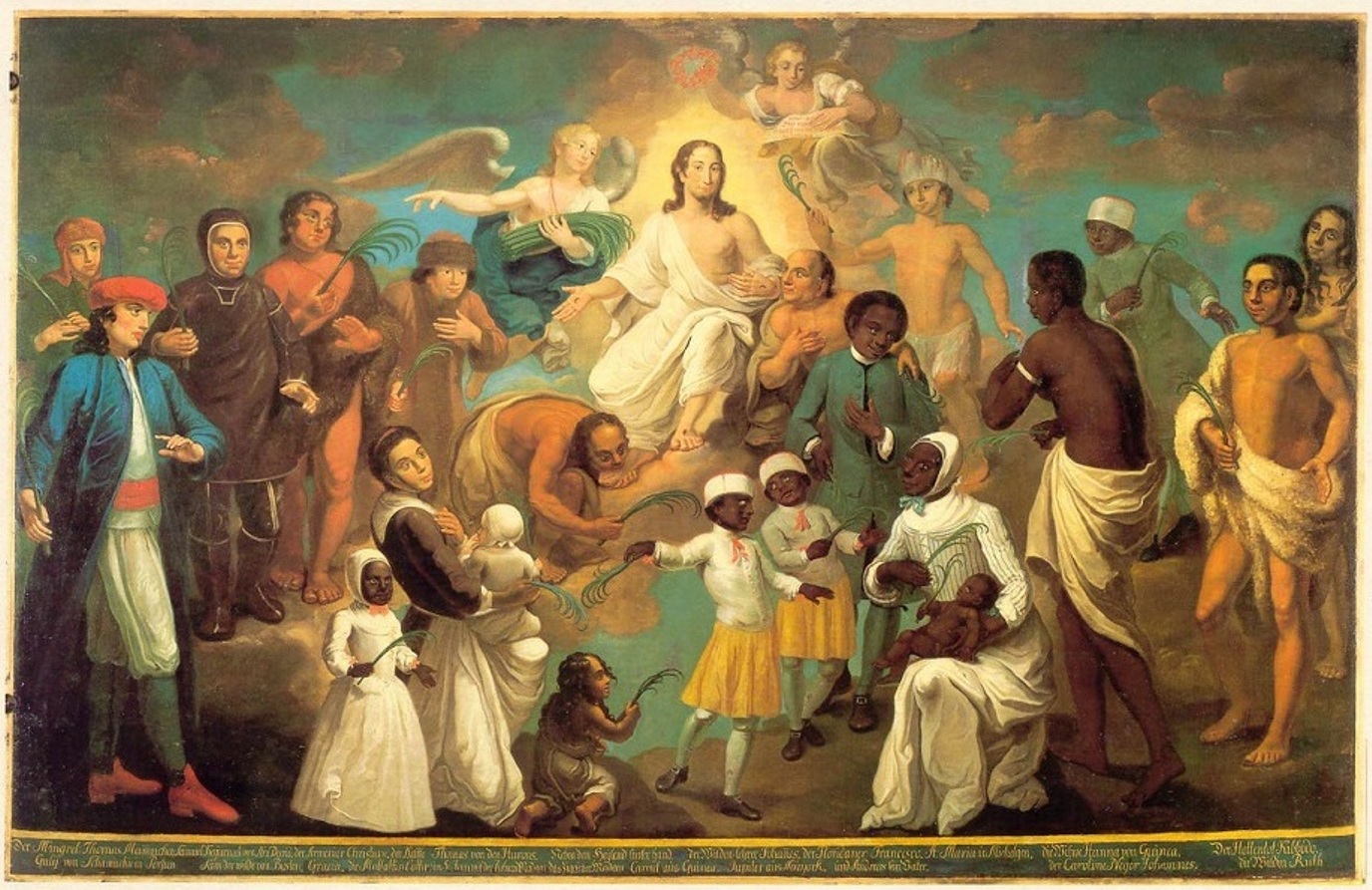
Have you ever stopped to think about how the Gospel made its way to you?
You can probably name the person who most influenced your faith—the one who shared the Gospel with you, prayed with you, answered your questions, or invited you to church. But how did the Gospel come to them? How did it make its way to your city, your nation, your language, your family?
The reality is that every one of us is reaping the benefits of more than 2,000 years of faithfulness—not always the faithfulness of Christians, but always the faithfulness of God.
We often think of history as the story of how we got where we are today. But perhaps history is better understood as the story of what God has been doing all along.
The death and resurrection of Jesus Christ is arguably the single most significant event in human history—so significant that our modern calendar is structured around it. Yet we sometimes view it as a completed event: Jesus accomplished something extraordinary, and now humanity carries the mission forward from here.
But that perspective misses the unifying thread that gives history its meaning. The reality is that even after His ascension, Jesus has never ceased advancing His kingdom. The risen Christ is not merely the founder of Christianity; He is its living King, actively accomplishing His purposes throughout history.
The story began in Palestine, but even before the close of Scripture, the Gospel was already moving throughout the Roman Empire. Paul wrote many of his letters from a Roman prison, where he proclaimed Christ not only to fellow prisoners and guards but also to members of the Praetorian Guard and even Caesar’s household.
The growth was remarkable. From a small movement of a few thousand believers, Christianity expanded throughout the empire. By around AD 400, an estimated six million people across Europe identified as Christians. The Gospel was moving.
The centuries that followed were filled with both beauty and tragedy.
Barbarian tribes swept across Europe, bringing devastation and upheaval. Yet many of those same tribes encountered Christ and were transformed by the Gospel. Celtic and monastic movements emerged, carrying the message of Jesus to the farthest reaches of the known world. The Vikings raided and conquered, but through captives, missionaries, and providential encounters, the Gospel found its way into the far North as well.
Not every chapter was a faithful one.
As Christian Europe encountered the expanding Islamic world, the Church often responded not with the Gospel of peace but with military campaigns. The Crusades remain one of the most painful examples of Christians confusing the mission of Christ with the pursuit of political power. One historian described this period as “the greatest abortion of the Gospel in history.” The consequences of those failures still echo in many of today’s cultural and religious tensions.
Yet even in those dark chapters, God continued His work. Men like Francis of Assisi, Raymond Lull, and others sought a different path—one marked by humility, sacrifice, and a genuine desire to bring the Gospel to Muslim peoples despite the hostility surrounding them.
By the time Martin Luther nailed his Ninety-Five Theses to the church door in Wittenberg, the Gospel had already reached places as distant as India, Japan, Angola, and Russia. Yet it would take nearly three centuries before the newly emerging Protestant movement fully embraced the responsibility of taking the Gospel to those who had never heard it.
When the Protestant missionary movement finally began, it introduced something distinctive: intentionality.
Entire congregations came to see global evangelization as a central part of their calling. Mission societies were formed. Resources were mobilized. People were sent. At the same time, advances in transportation, printing, communication, and medicine opened doors that previous generations could scarcely have imagined. The Gospel moved from coastlands into continents, crossed oceans to the New World, and played a profound role in shaping the modern world.
And through every century, every success and failure, every revival and setback, one truth remained constant:
God was still at work.
The story of the Gospel is not ultimately the story of great missionaries, courageous reformers, influential pastors, or faithful churches. It is the story of a faithful God who has been relentlessly pursuing people from every tribe, tongue, nation, and generation.
Which brings us back to the original question: How did the Gospel reach you?
The answer is that countless believers—most of whose names we will never know—played their part. Someone crossed a border. Someone translated a Bible. Someone planted a church. Someone endured persecution. Someone discipled a new believer. Someone gave. Someone prayed. Generation after generation, ordinary Christians participated in the extraordinary work of God.
And now it is our turn.
We are not standing at the end of the story. We are standing in the midst of it.
The same Christ who commissioned His followers two thousand years ago is still building His Church today. The same Gospel that crossed the Roman Empire, survived the collapse of civilizations, weathered the failures of God’s people, and spread across the globe is still advancing.
One day, future generations will look back on our moment in history just as we look back on those who came before us. The question is not whether God will continue His mission. He will.
The question is whether we will be found faithful in our generation.
Because the Gospel didn’t arrive here by accident. And it won’t reach the next generation by accident either.