
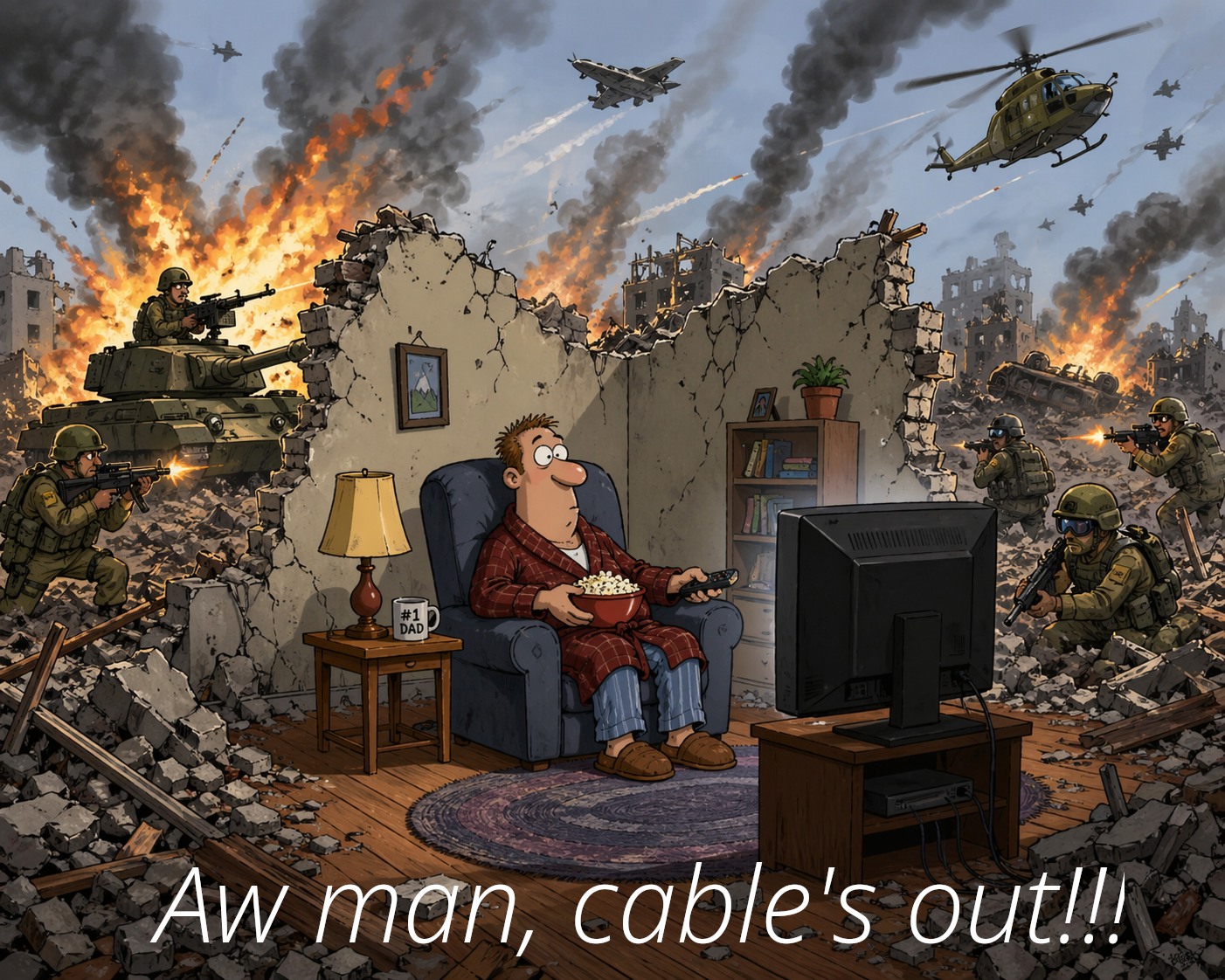
Tucked inside that question is an assumption that can quietly erode faith—the idea that life operates like a formula: do good, be good, earn God’s favor, receive His blessing.
But that’s not the world Scripture describes. And when that assumption meets reality, it can feel like hitting a wall.
A framing that has grounded me over the years is this: we were born into a world at war.
Not metaphorically—spiritually.
The Bible does not shy away from naming a real, personal Enemy of God and of mankind, along with spiritual forces aligned with him. Jesus describes him as one who comes to steal, kill, and destroy—a prowling lion seeking to devour. Paul makes it even clearer: our struggle is not merely against flesh and blood, but against rulers, authorities, and spiritual forces of evil.
This matters, because it reframes the question.
The hardship we experience is not evidence that God is absent or unkind. It is, in part, the reality of living in contested territory—where the goodness of God is actively opposed.
And into that reality, the Gospel speaks.
Yes, the fruit of the Gospel is peace, restoration, and wholeness. But its power is revealed against evil. It confronts, overcomes, and ultimately defeats the works of the Enemy.
Which means the Christian life is not just an invitation to blessing—it’s also an enlistment.
We are told to put on the full armor of God.
To take up weapons not of this world.
To endure hardship as good soldiers of Christ.
In other words: we fight—not people, but the spiritual forces that seek to corrupt and destroy what God loves.
What might change if we actually lived with that clarity?
What if we saw ourselves not only as deeply loved children of God, but also as participants in His ongoing campaign to push back darkness?
What if our aim wasn’t primarily comfort or success, but faithfulness to His mission?
Jesus points us forward: “This gospel of the kingdom will be proclaimed throughout the whole world… and then the end will come.” (Matthew 24:14)
And the end is not uncertain. Scripture promises the complete and final defeat of Satan and his forces, and a restored creation where God dwells with His people.
Revelation says it this way:
“They overcame him by the blood of the Lamb and by the word of their testimony; they did not love their lives so much as to shrink from death.”
That’s the reality we’re living in.
A world at war.
A decisive victory already secured in Christ.
And a people called to live, speak, and endure in light of both.
That perspective doesn’t remove hardship—but it gives it meaning, direction, and hope.